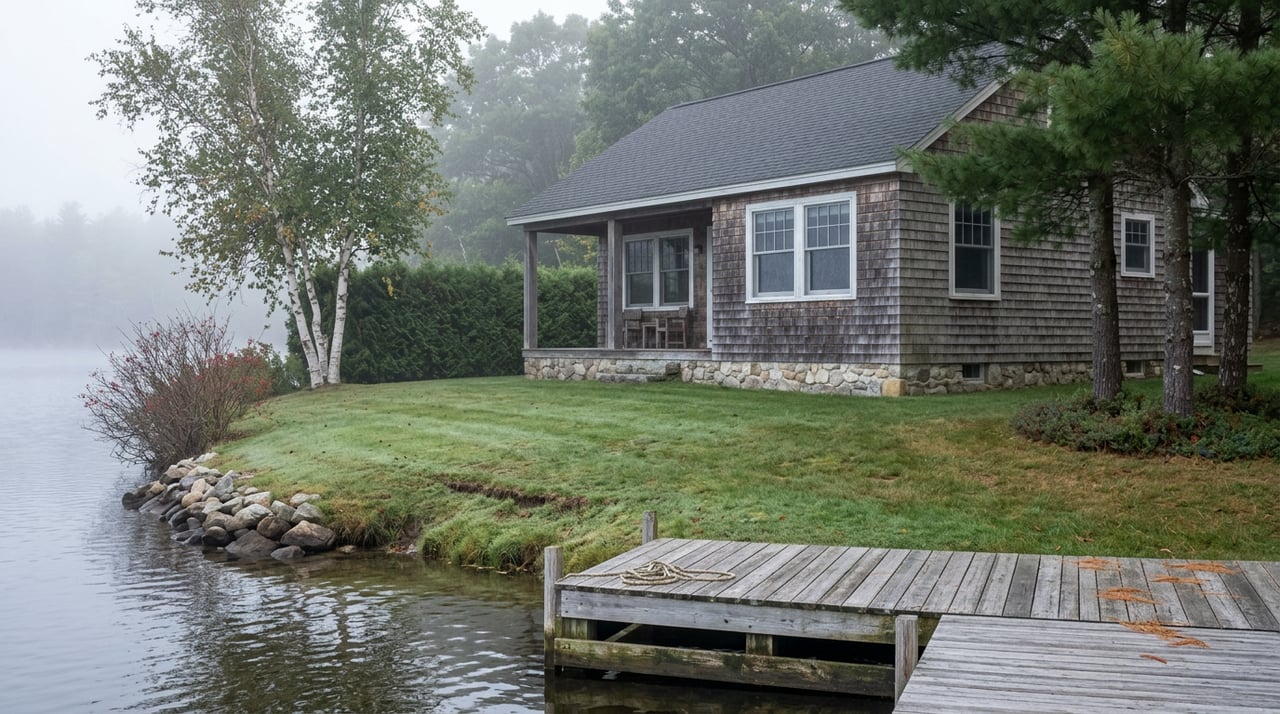
Buying Grand Lake Waterfront in Presque Isle? Read This First
August 13, 2026
August 13, 2026
If you are under contract on a Grand Lake cottage this month, the paperwork on your closing table looks different than it did in 2024. Two new items now show up before the keys change hands: a septic and well transfer requirement out of Presque Isle Township, and a special assessment tied to the lake's own water-control structure. Neither has anything to do with the house's square footage or its dock length.
Grand Lake itself hasn't changed. It's still the same 5,600-acre spring-fed lake known for clear water and scattered islands that has drawn cottage owners for generations. What changed is the machinery underneath every transfer of property that touches it, and that machinery moved fast: three separate actions in twelve months, and a fourth issue tied to the August 10 hearing.
| Date | What happened | Why it matters at closing |
|---|---|---|
| Nov. 8, 2025 | Presque Isle Township's Septic/Well Inspection and Property Transfer Ordinance takes effect | Certain property transfers now require a District Health Department No. 4 septic and well evaluation |
| Dec. 22, 2025 | 53rd Circuit Court establishes the Grand Lake special assessment district and amends the lake level order | Parcels with legal access to Grand Lake now carry an assessment tied to the lake's control structure |
| Feb. 14, 2026 | Amendment to the transfer ordinance takes effect | Buyer and seller can close without a completed DHD4 evaluation if they agree in writing to assign that responsibility |
| Aug. 10, 2026 | Scheduled Circuit Court hearing on seasonal lake levels | Proposed six-inch fall drawdown; the hearing date has passed, so check the court's decision |
The first three entries describe actions taken for different reasons; the fourth concerns a seasonal lake-level proposal. Here is what each one means if you're the one signing.
Presque Isle Township's Septic/Well Inspection and Property Transfer Ordinance took effect on November 8, 2025. It requires inspection of private septic and well systems on properties that are sold, transferred, or lack an on-record septic permit. The inspections themselves are handled through District Health Department No. 4, the same agency that oversees environmental health across Alpena, Cheboygan, Montmorency, and Presque Isle counties.
That's the part most buyers can find with a little searching. What's easy to miss is the amendment that followed two months later. On January 12, 2026, the township amended the ordinance to let property transfers proceed without a completed DHD4 evaluation, as long as buyer and seller agree in writing to assign responsibility for it after closing. That amendment took effect February 14, 2026, and it functions as a pressure valve: instead of a closing stalling out while both parties wait on an inspection slot, the deal can move forward with that obligation carried forward instead of resolved up front.
If you're not sure whether a property already has a septic permit on file, DHD4 accepts a Request for Review of Public Records to check. If an inspection is needed, scheduling starts with a call to the health department and an Application for Existing Private Onsite Water & Wastewater System Inspection. The township also keeps a brochure that doubles as the required time-of-transfer notification, available at the township hall or as a download from the township's news page.
None of this is difficult once you know it exists. The problem is that it's brand new enough that plenty of people in the middle of a transaction right now don't know it exists yet.
The bigger shift landed the same month, on the same court docket. On December 22, 2025, the 53rd Circuit Court granted Presque Isle County's petitions establishing a special assessment district for Grand Lake and updating the lake's legal level order. The district covers parcels that benefit from the lake's legal water level, generally those with private access to the water, along with township and state-owned parcels and boat launches. The money funds upkeep of the Lake Level Control Structure, a concrete structure on the lake's northwest side at the Grand Lake outlet that has been maintaining the legal level since it was built in the 1950s, under Part 307 of Michigan's Natural Resources and Environmental Protection Act. Presque Isle County Drain Commissioner Bob Macomber is the delegated authority responsible for it.
That same order updated the survey datum used to measure the lake's level to NAVD88 and added language allowing reasonable variation from construction work, weather, or permitted operations.
Here's the part worth sitting with: this assessment is new to everyone. There's no five-year history to point to, no established seller custom for how it gets prorated at closing, because the district itself is not yet a year old as of this writing. A title company can tell you a property's taxes going back a decade. Nobody can tell you what a "normal" year looks like for this assessment, because there hasn't been one yet.
That's also why it pays to ask how a specific closing handles it, not assume. Private lake communities near Grand Lake are already writing their own rules into their governing documents. The Presque Isle Harbor Association, for example, splits responsibility for its own special and annual assessments based on closing date: sales closed on or before February 21, 2026 leave both payments with the purchaser, while sales closed after that date shift the special assessment to the seller, and the annual assessment follows a separate April 1 cutoff. That's PIHA's internal rule for its own dues, not the county's lake-level assessment, but it shows why buyers should ask how an association handles its own dues and special assessments at closing.
The August 10, 2026 hearing date has passed, and this post does not report the court's decision. Before August 10, Grand Lake operated under a single, year-round legal level. The proposal would have let the county draw the lake down six inches each fall and refill it to the then-current level each spring, keeping water higher for summer boating and lower through winter to reduce shoreline erosion, ice damage, and spring flooding, according to The Alpena News.
Drain Commissioner Bob Macomber said the push came directly from residents, noting the county had gotten a "significant amount of feedback from property owners requesting" the change. Mike Size, a dam safety engineer with Michigan's Department of Environment, Great Lakes, and Energy, backed the approach in the same report, calling seasonal lowering "a well-established practice at several lake level control structures in Michigan" that can "protect natural resources of the state and provide benefits to lakefront property owners." Before August 10, EGLE had stated it supported the drawdown as proposed.
The report said an approval would take effect immediately, which could allow a six-inch fall drawdown in the 2026-27 winter season. Before relying on a lake-level change when evaluating a dock, seawall, or beach, check the court's decision and ask about any erosion or ice-damage history.
Does the septic ordinance apply everywhere in Presque Isle County, or just this township? This is a Presque Isle Township ordinance, enforced through DHD4. Other townships in the county set their own transfer rules, so a property just outside township lines may follow a different process entirely.
Does the new special assessment cover Lake Esau too? Lake Esau has its own separate lake level order and assessment process moving through the same court. It's a distinct district from Grand Lake's, even though both were addressed on the same December 2025 docket.
What did the August 10 hearing decide? This post does not report the court's decision; check the court's order before relying on a change to lake levels.
None of this should scare anyone off Grand Lake. It's still one of the clearer lakes in Northeast Michigan, with good fishing, a handful of islands, and a lake association that has kept it that way for decades. It just means the fine print needs a closer read than it used to, including the court's decision on seasonal lake levels.
If you're weighing a purchase on Grand Lake or getting ready to list one, I'd rather walk you through the current ordinance paperwork and assessment numbers before you write an offer than explain them after. Let's Connect with Eric Arnoldi.
This article is general information, not legal, tax or financial advice. Consult a qualified professional about your situation.
Stay up to date on the latest real estate trends.
Ready to find your Northern Michigan lakefront home — or sell the one you've built? Eric knows every waterfront corridor from Alpena to Presque Isle. Let's talk.