Hawks-Area Hunting Land Can Carry Three Different Tax Deals, and the Deed Doesn't Say Which One You're Getting
October 1, 2026
October 1, 2026
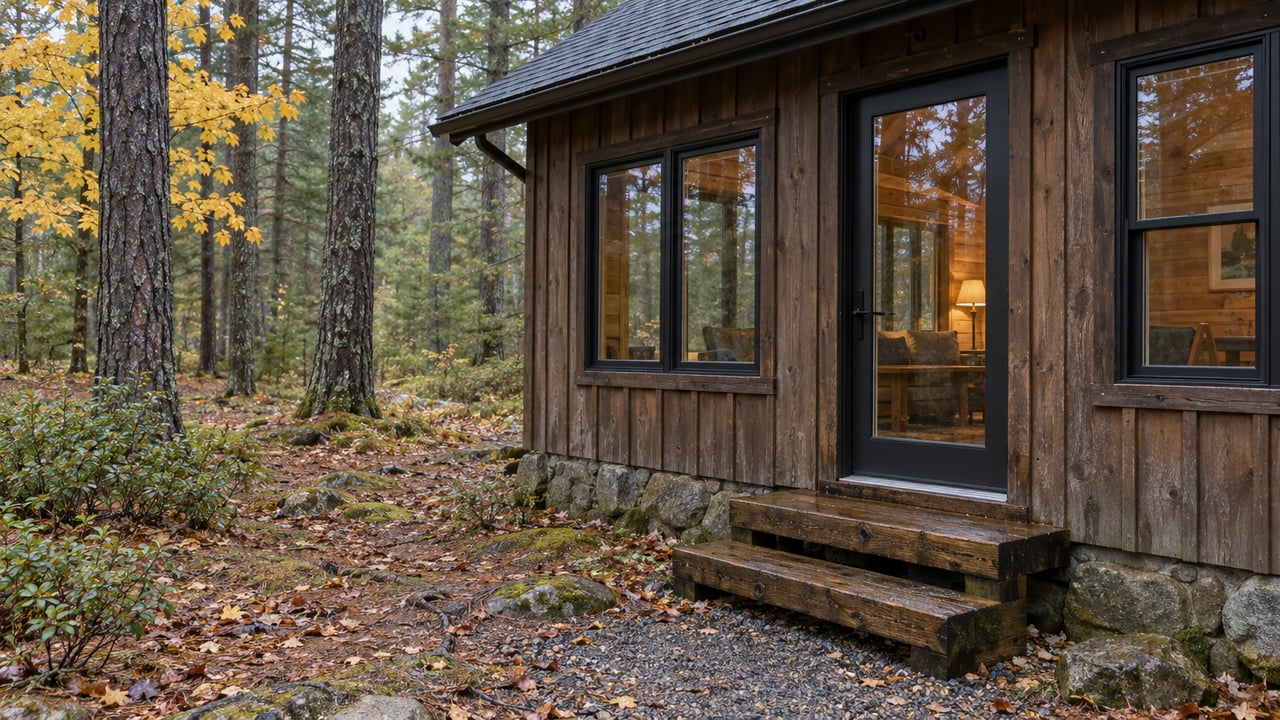
A buyer walks a forty-acre parcel outside Hawks in October, likes the mix of hardwoods and open ground, and asks the seller why the taxes are so low. The seller mentions something about a forestry program from years back. Nobody follows up. The offer gets written, the appraisal comes back fine, and it isn't until a title search or a call to the township assessor that anyone learns the land is enrolled in the Commercial Forest Program, which the Michigan DNR says requires public access the new owner never agreed to.
That scenario plays out often enough in Presque Isle County's hunting-land market that it deserves its own explanation, because the mechanism behind it is easy to miss and expensive to unwind. Land near Hawks, the small unincorporated community in Bismarck Township named for Detroit and Mackinac Railway president James Dudley Hawks after the railroad opened a station there in 1895, sits in a part of Northeast Michigan where forestry and access programs are common on larger acreage. Three separate state programs can change what a parcel costs to hold and what a buyer is allowed to do with it, and none of them transfer the same way.
The confusion starts because all three programs sound like variations on the same idea: give something up, get a tax break. In practice they're structured very differently, and the differences matter most at the moment of sale.
| Program | Minimum acreage | What it does to taxes | Public access required | What happens when the land sells |
|---|---|---|---|---|
| Qualified Forest Program | Green Timber lists 20 to 39 acres at 80% productive forest, or 40+ acres at 50% productive | Exempts the land from certain school operating taxes | No | The Michigan Department of Agriculture and Rural Development explains that enrollment can transfer, and the new owner takes on filing obligations |
| Commercial Forest Program | 40+ contiguous acres, owner must hold timber rights | Land is taxed at a flat statutory forestry rate instead of standard assessed value, a rate the legislature adjusts upward every few years | Yes, foot access for hunting, fishing, and trapping | Enrollment runs with the land. A title transfer of less than 10,000 acres must either maintain public access or formally withdraw, and the Michigan DNR says withdrawal carries a penalty paid to the township |
| Hunting Access Program | The landowner is paid directly for allowing hunter access | Yes; the Michigan DNR leases private lands for public hunting |
The county has been actively promoting it through the Presque Isle Conservation District, which administers applications and can tell a landowner what a specific parcel's habitat quality might be worth in payments. That program has existed since 1977.
The Commercial Forest Program works the opposite way. It's the one that follows the land whether the new owner wants it to or not, and it's the one most likely to surprise someone who bought hunting land expecting privacy. The public retains the right to hunt, fish, and trap on foot across enrolled acreage, and landowners can't post the property or build permanent structures like blinds without risking the DNR ordering the parcel withdrawn.
If a parcel near Hawks is enrolled in the Commercial Forest Program, that status doesn't disappear at closing. The new owner is responsible for program compliance from day one, whether or not the enrollment was disclosed clearly during negotiations. Michigan law places the burden of notifying the state about the title transfer on the county equalization office, but the practical result is the same either way: if the new owner wants out, they have to formally withdraw the land, and withdrawal comes with a penalty calculated as a partial repayment of the taxes the program let the previous owner avoid.
That's a meaningfully different outcome than a buyer might expect from a "low property tax" selling point. The Qualified Forest Program is friendlier to buyers who want privacy, since it doesn't require public access, but it does require an approved forest management plan and ongoing timber reporting to the state, and buildings on the enrolled acreage don't get the tax break, only the surrounding forestland does.
None of this applies to every parcel near Hawks. A five-acre listing at 4611 W County Highway 638, currently on the market at $400,000 with a 1,700-square-foot home, sits well under the 20-acre threshold where either forestry program becomes relevant. That property comes with its own list of recent updates, a 2020 natural gas furnace, a 2023 roof, a 2023 water softener, a Generac whole-house generator, and PIE&G fiber internet, plus a spring-fed pond stocked with bass and bluegill. It's a straightforward small-acreage home purchase, not a forestry-program parcel, and that's worth pointing out because the two categories get lumped together in casual land-shopping conversation when they really shouldn't be. Program enrollment only becomes a live question once a parcel crosses into the 20-to-40-acre range and up, which is exactly the range where most dedicated hunting tracts near Hawks sit.
Anyone comparing land near Hawks against other Northeast Michigan towns has probably run across a per-acre average online. As of research in September 2026, one land-listing aggregator showed just three active hunting properties near Hawks, with an average listing price of $394,450 and an average cost of $6,048 per acre. That's not a market. That's three sellers, three sets of motivations, and three parcels that may differ wildly in road frontage, water, and whether they carry a forestry-program enrollment that changes what a buyer inherits along with the acreage.
A single well-improved parcel with a pond and a newer home, or a single large tract enrolled in the Commercial Forest Program at a fraction of standard tax rates, can swing that average in either direction without telling a buyer anything useful about what a comparable, unencumbered forty acres would actually cost. Treat any per-acre figure for a market this thin as a starting point for questions, not as a number to negotiate against.
A buyer looking at acreage near Hawks, or anywhere else in Bismarck Township or the surrounding Presque Isle County countryside, should get answers to a short list of questions before making an offer:
None of these programs make land near Hawks a bad buy. Ocqueoc Falls, the largest waterfall in Michigan's Lower Peninsula and the only universally accessible falls system in the country, sits a short drive from Hawks along M-68, with a rustic state forest campground running on the honor system for anyone who wants to camp near it. The area has real recreational value on its own terms. The point is simpler than that: the tax bill and the access rules attached to a specific parcel are facts about that parcel, not about the town, and they're worth confirming before an offer goes in rather than after.
If you're comparing hunting land, acreage, or a small homestead near Hawks and want help sorting out what a specific parcel actually carries with it, reach out to Eric Arnoldi. Let's Connect.
This article is general information, not legal, tax or financial advice. Consult a qualified professional about your situation.
Stay up to date on the latest real estate trends.
Ready to find your Northern Michigan lakefront home — or sell the one you've built? Eric knows every waterfront corridor from Alpena to Presque Isle. Let's talk.