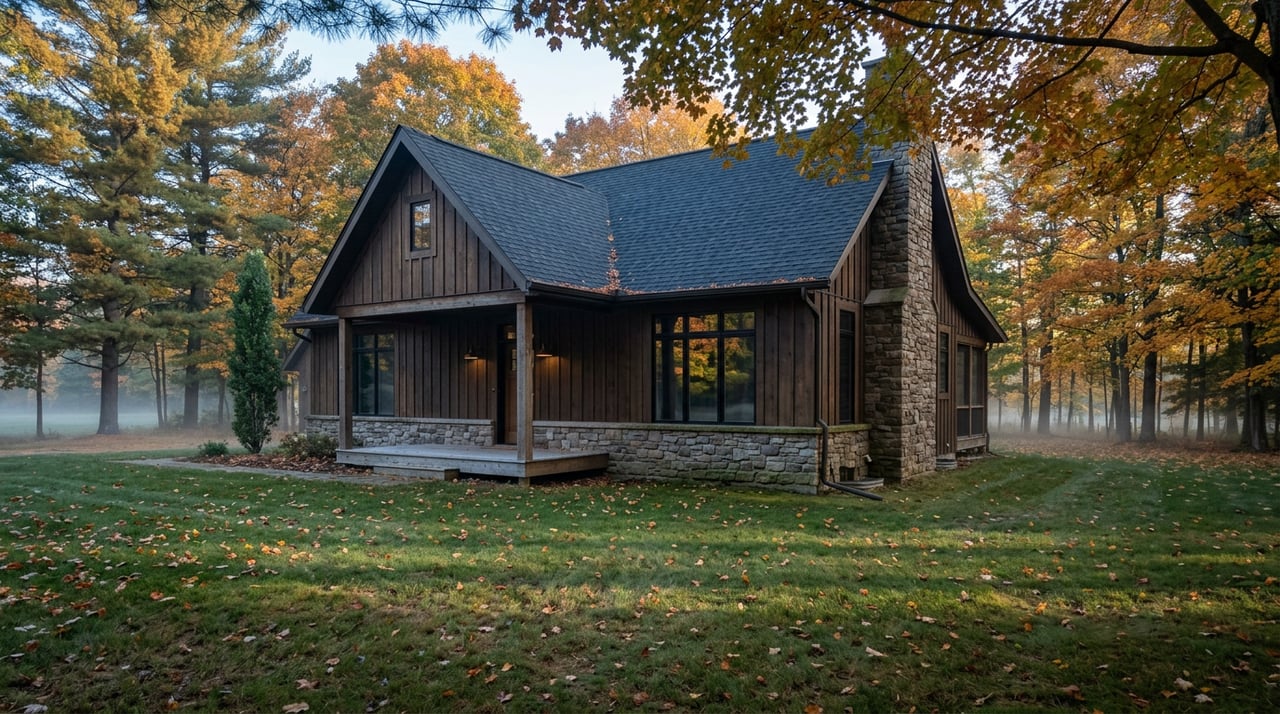
The Sinkhole Question Rogers City Sellers Don't Know They're Supposed to Answer
September 3, 2026
September 3, 2026
A few years back, a resident in Rogers Township noticed something wrong with the water coming out of the tap. The county health department got involved, and what they found surprised even the people who'd spent decades studying this ground. Septic effluent from a nearby system had traveled roughly 400 feet underground in about 18 hours, moving through cracks in the limestone bedrock faster than it would have moved through almost any other kind of soil in Michigan. Frank Krist, who spent 34 years with the Presque Isle County Health Department, later described the incident while explaining why the county pays such close attention to what's happening below the surface here, not just what's built on top of it.
That case sits at the center of a paperwork problem that matters more in Rogers City than it does almost anywhere else in the state. Michigan's Seller Disclosure Statement, the standard form every home seller in the state fills out, has no line item that asks about sinkholes. Not one. And in a county the Michigan Natural Features Inventory identifies as home to the most extensive concentration of sinkholes and earth cracks in Michigan, that's not a small omission.
The Seller Disclosure Statement, set out in Michigan Compiled Laws 565.957, asks sellers to check boxes on a fairly specific list: roof condition, plumbing, appliances, insulation, well and septic history, environmental hazards like asbestos or underground storage tanks. The closest thing to a karst question is a single checkbox for "settling, flooding, drainage, structural or grading problems." That's it. Whatever a buyer learns about ground stability on a Rogers City property, it's filtered through that one general category.
Here's the part that matters even more. Under the law, a seller isn't responsible for disclosing anything they don't personally know. If a previous owner filled a small collapse feature decades ago and never told anyone, and the current seller genuinely has no idea it's there, the form can come back clean and still be legally accurate. This isn't a loophole anyone is exploiting. It's just how the form is built, and in most of Michigan that's a reasonable design because most of Michigan isn't sitting on dissolving limestone.
Presque Isle and Alpena Counties aren't a footnote to Michigan's karst story, they're the main chapter. Some of the more dramatic examples are a short drive from Rogers City. Stevens Twin Sinks, managed by the Michigan Karst Conservancy, are a pair of steep-walled depressions formed by dissolved Devonian limestone. Near Posen, the Mystery Valley Karst Preserve covers 76 acres and includes a valley a mile and a half long, 1,500 feet wide, and 150 feet deep, complete with a lake that periodically appears and disappears entirely depending on how the underground drainage is behaving that season. Bruski Sink, also county-documented, is another exposed example of the same process happening at a smaller scale.
None of this means every lot in Rogers City has a sinkhole waiting under the lawn. It does mean the geology that produces these features doesn't stop at the edge of a preserve boundary. It's regional, and Rogers Township is inside that region.
Standard soil filters contaminants slowly, which is part of why septic systems work the way they do almost everywhere. Karst skips that step. Water and whatever is in it can travel through fractured limestone in hours instead of months, which is exactly what happened in the Rogers Township case. MSU water quality researchers have made the same point about this part of the state directly: the presence of karst features is a clear signal that surface water and whatever is dissolved in it can move quickly underground, without the usual buffering effect of dense soil.
For a buyer, that changes what a routine well test should actually cover. A standard bacteria screen might come back clean on the day you test it and say very little about what happens after heavy rain, when surface runoff has an easier path down through cracked bedrock. For a seller, it means understanding your own septic system's history and maintenance record is worth more here than it would be in a lot of other Michigan towns, simply because the margin for a slow, hidden problem is smaller.
Standard homeowners insurance policies in Michigan typically treat sinkhole and ground collapse damage as a form of "earth movement," which is a common exclusion on standard policies. Coverage usually requires a specific endorsement or rider, purchased separately, and it's easy to go through an entire purchase without anyone raising the question. Most buyers assume homeowners insurance is homeowners insurance. In a karst county, that assumption is worth checking before closing rather than after a structural surprise.
None of this is a reason to avoid buying or selling in Rogers City. Karst geology has been part of this landscape for longer than the town has existed, and the vast majority of transactions here close without incident. It's a reason to ask a few specific questions rather than relying on the disclosure form to surface everything on its own.
If you're buying:
If you're selling:
Does this mean my property probably has a sinkhole? No. Karst features are concentrated in specific, documented locations across the county, not evenly spread across every parcel. The point isn't that your lot has one, it's that the standard paperwork wasn't built to catch it either way.
Will a home inspector catch a karst problem during a normal inspection? Usually not directly. Standard home inspections focus on the structure itself, not subsurface geology. If you want that specific question answered, it typically requires asking for it separately, either through a geotechnical assessment or by focusing your well and septic questions the way described above.
Is this specific to Rogers City, or does it apply to the whole area? The karst formations extend across Presque Isle and Alpena Counties broadly. Rogers City and the surrounding townships sit inside that same geological footprint, which is why the questions above are worth asking for property throughout the area, not only within city limits.
This is exactly the kind of detail that's easy to miss on a listing sheet and expensive to discover after the fact. If you're looking at property in Rogers City or anywhere else across Northeast Michigan and want someone who'll walk through what the paperwork does and doesn't cover before you're under contract, Eric Arnoldi is glad to talk it through. Let's Connect.
Stay up to date on the latest real estate trends.

Ready to find your Northern Michigan lakefront home — or sell the one you've built? Eric knows every waterfront corridor from Alpena to Presque Isle. Let's talk.