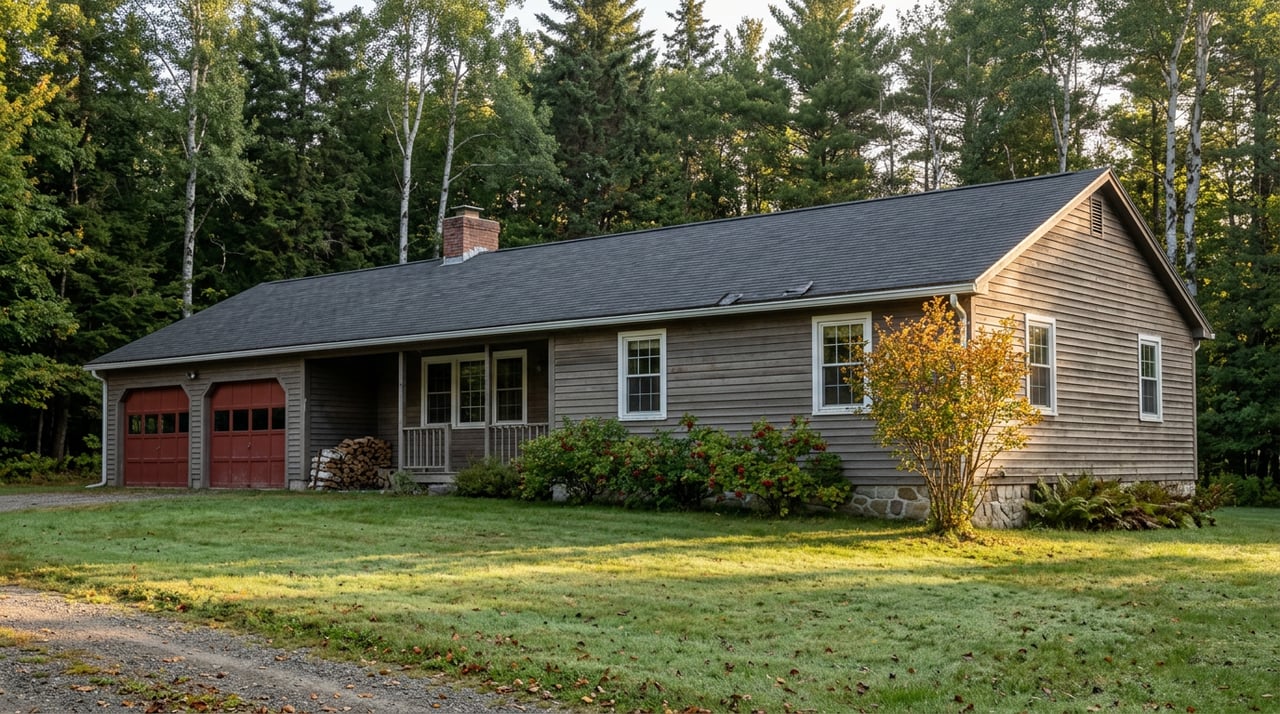
Presque Isle's New Septic Opt-Out Doesn't Remove the Risk. It Just Moves It to Closing Day.
August 20, 2026
August 20, 2026
Presque Isle Township passed a septic and well ordinance in November that tightened what happens at closing. Two months later, in January, it loosened the same rule. If you're buying or selling a home on private septic in the township right now, that whiplash is worth understanding before you sign anything, because the January change reads like relief and functions more like a handoff.
Here's what actually happened, what it means at the closing table, and why the answer looks different depending on which side of the transaction you're standing on.
The Septic/Well Inspection and Property Transfer Ordinance took effect on November 8, 2025. It requires an inspection of the private septic and well systems any time a property in the township sells, transfers ownership, or turns out to have no septic permit on file at all. That evaluation runs through District Health Department No. 4, the agency that also handles environmental health for Alpena, Cheboygan, and Montmorency counties.
Michigan doesn't have a statewide sanitary code. It's the only state that doesn't. Instead, 45 separate local health departments each write their own rules, which means a septic ordinance in one township can look nothing like the one in the county next door, and plenty of Michigan communities have no time-of-sale requirement whatsoever. Presque Isle Township's ordinance was a real, specific, local decision to require the evaluation before a deal closes.
On January 12, 2026, the township amended the ordinance, with the amendment taking effect February 14, 2026. The change lets a sale close without the DHD4 evaluation happening first, as long as buyer and seller put it in writing that the buyer is taking on the job of getting that evaluation done after closing.
That sounds like a simplification. It isn't quite one.
The evaluation still has to happen. The only thing the amendment changes is when it happens and who is standing there when the results come back.
Before the amendment, a failing septic system showed up during due diligence, while a buyer still had leverage to negotiate a price adjustment, ask for repairs, or walk away. After the amendment, if both parties agree to the opt-out, that same failing system shows up after the deed has already changed hands, when the only person left holding the problem is whoever signed up to be responsible for it.
Think of it less as one rule and more as two different paths a transaction can take, with very different consequences if the system underneath the house turns out to be a problem.
| Path A: Evaluation Before Closing | Path B: Buyer Assumes After Closing | |
|---|---|---|
| Who arranges it | Seller, typically before or during the listing process | Buyer, after taking ownership |
| When results are known | Before the purchase agreement is finalized | After closing, when the deal is already done |
| Buyer's leverage if it fails | Can negotiate price, request repairs, or exit the deal | None. The property is already theirs |
| Who absorbs a failed system | Negotiable between both parties | The new owner, in full |
Path A is the version most people picture when they hear "septic inspection required before closing." Path B is the version the January amendment now makes legal, and it only works because both sides sign off on it in writing before the sale is final. Nobody gets defaulted into Path B by accident. But it is entirely possible to agree to it without fully weighing what you're giving up, especially if the purchase agreement frames it as a convenience rather than a risk transfer.
This distinction matters more in Presque Isle County than it might somewhere else, because much of the county sits on shallow soils over Niagaran limestone bedrock, which limits how deep a conventional drainfield can go. Sandy soils show up in some inland spots and near the Lake Huron beaches, but the shallow bedrock is the constraint that shapes septic design across most of the county. That's not a detail that shows up on a listing sheet. It's the reason a failing system here isn't always a matter of a straightforward repair. Sometimes it means an engineered alternative, and those cost real money.
A septic inspection in Michigan runs somewhere between $250 and $700 in 2026, a small enough number that most sellers can absorb it before listing. A failing system that needs to be replaced is a different conversation entirely, with industry estimates putting full replacement north of $20,000. That gap is the whole reason the timing of the evaluation matters. Find out before closing, and it's a negotiation. Find out after, and it's a bill with your name on it.
The cleanest move for most sellers is still to get the DHD4 evaluation done before listing, on your own timeline, rather than leaving it for a buyer to discover during due diligence or after closing. It costs less than most people expect relative to the size of the transaction, and it lets you list with a known condition rather than an open question. If you're not sure whether your property already has a septic permit on file, the township accepts a Request for Review of Public Records that DHD4 can answer directly.
The township also keeps a brochure that doubles as the required time-of-transfer notice, available at the township hall, and it's worth reading before you talk to a buyer about which path you're proposing.
If a purchase agreement includes language letting the sale close without a DHD4 evaluation, read that clause as what it is: an agreement that you'll be the one dealing with whatever that system turns out to be, on your own schedule, with no ability to renegotiate the price afterward. That might be a completely reasonable trade if the home is priced accordingly and you've budgeted for the possibility of a repair. It's a much worse trade if you're accepting it simply because it was written into the contract and nobody explained what it meant.
Before agreeing to that path, ask whether the parcel has a septic permit on file at all. To schedule your own evaluation or check on an existing permit, DHD4 can be reached at (989) 734-4723.
None of these questions require a lawyer to ask. They just require asking them before the ink dries instead of after.
Does this ordinance apply outside Presque Isle Township? This specific ordinance is a township-level rule, not a countywide one. DHD4 covers environmental health across four counties, but individual townships and municipalities within its jurisdiction can and do adopt their own time-of-transfer requirements, so a similar sale in a neighboring township may be governed by a different rule entirely.
What if the property has no septic permit on record at all? That's one of the three triggers for the original ordinance, alongside a sale or transfer. No permit on file means DHD4 has no documented history of the system, which is exactly the kind of unknown that makes an upfront evaluation worth the cost regardless of which path the purchase agreement takes.
The amendment gave Presque Isle Township transactions a second way to close. It didn't make the underlying question go away. Whether you're listing a place on private septic or looking at one, knowing which path you're on, and what you're actually agreeing to, is worth sorting out before you're at the table signing.
If you're weighing a sale or a purchase in Presque Isle Township and want to talk through what this means for a specific property, Eric Arnoldi is glad to help you sort out the details. Let's Connect.
Stay up to date on the latest real estate trends.

Ready to find your Northern Michigan lakefront home — or sell the one you've built? Eric knows every waterfront corridor from Alpena to Presque Isle. Let's talk.